Showing posts with label Volkswagen. Show all posts

Thursday, February 10, 2011

2011 Volkswagen Sports Cars XL1 (SEV) Roadster Diesel-Electric Hybrid Concept

2011 Volkswagen Sports Cars XL1 (SEV) Roadster Diesel-Electric Hybrid Concept
The latest Volkswagen will unveil the 3rd and latest iteration by its roadster diesel-electric hybrid concept serial, the fresh XL1 Super effective Vehicle (SEV) at these week’s Qatar Motor demo, which runs by January 26 to 29. The latest 2011 Volkswagen XL1 Hybrid Concept are motivated by a diminished 800 cc TDI two-cylinder basic rail diesel engine breaking 48 HP.
Vision becomes reality – Volkswagen’s “Formula XL1”:  Volkswagen XL1 prototype consumes just 0.9 l/100 km! Wolfsburg / Doha, 25 January 2011 - Future mobility is one of the most stimulating topics of our time. The key question here: Just how much could the energy consumption of cars be reduced if all the stops were pulled out for efficiency? There is now an answer to this question, and Volkswagen is delivering it in the form of the new XL1. Combined fuel consumption: 0.9 l/100 km. No other hybrid car powered by an electric motor / internal combustion engine combination is more fuel efficient.
2011 Volkswagen Sports Cars XL1 (SEV) Roadster Diesel-Electric Hybrid Concept
Volkswagen will build small run of XL1 plug-in hybrid in two years. “We want to go into series production with this car starting in 2013,” Volkswagen chairman Ferdinand Piech told Automotive News Europe on Tuesday at an event in Doha, Qatar, ahead of the 2011 Qatar auto show where Volkswagen unveiled an XL1 prototype. Pioneering construction techniques, an advanced plug-in hybrid drivetrain and innovative packaging all play a part in allowing the new Volkswagen XL1 Super Efficient Vehicle (SEV) to return 260 mpg on the combined cycle to set a new benchmark for vehicle efficiency.
The most efficient car in the world. The new 2011 Volkswagen Sports Cars XL1 (SEV) Roadster Diesel-Electric Hybrid Concept shows the way forward for extreme economy vehicles and clean technologies. It also demonstrates that such cars can also be fun.  The feeling when driving the XL1 is truly dynamic - not based on pure power, rather on its pure efficiency. Two examples: 1) To travel at a constant speed of 100 km/h, the prototype only needs 6.2 kW/8.4 PS – a fraction of the performance of today’s cars (Golf 1.6 TDI with 77 kW and 7-speed DSG: 13.2 kW/17.9 PS). 2) In electric mode, the XL1 needs less than 0.1 kWh (82 Wh/km) to complete a one kilometre driving course. These are record values.
Powering the 2011 Volkswagen Sports Cars XL1 (SEV) Roadster Diesel-Electric Hybrid Concept is a compact 800 cc TDI two-cylinder common rail diesel engine developing 47 hp. It's linked to an electric motor producing 27 hp, resulting in a total of 74 hp - a modest output yet more than enough when the low kerb weight of 1753 lbs (795 kg) of the vehicle is taken into account. Two-cylinder TDI uses mass production technology: The 0.8 litre TDI (35 kW/48 PS) was derived from the 1.6 litre TDI, which drives such cars as the Golf and Passat. The 0.8 TDI exhibits the same data as the 1.6-litre TDI common rail engine in terms of cylinder spacing (88 mm), cylinder bore (79.5 mm) and stroke (80.5 mm).
2011 Volkswagen Sports Cars XL1 (SEV) Roadster Diesel-Electric Hybrid Concept
In addition, the Volkswagen XL1 Concept's two-cylinder and the mass produced four cylinder share key internal engine features for reducing emissions. They include special piston recesses for multiple injection and individual orientation of the individual injection jets. The excellent, smooth running properties of the common rail engines were transferred to the two cylinder engine. within addition, a balancer shaft that is driven by the crankshaft turning at the same speed optimises smooth engine running.
When the full power of the hybrid system is engaged, the Volkswagen prototype accelerates from 0 to 100 km/h in just 11.9 seconds; its top speed is 160 km/h (electronically limited). Yet these numbers alone do not tell the whole story: Since the XL1 weighs just 795 kg, the drive system has an easy job of propelling the car. When full power is needed, the electric motor, which can deliver 100 Newton metres of torque from a standstill, works as a booster to support the TDI engine (120 Newton metres torque). Together, the TDI and E-motor deliver a maximum torque of 140 Newton metres in boosting mode.
2011 Volkswagen Sports Cars XL1 (SEV) Roadster Diesel-Electric Hybrid Concept
Carbon fibre reinforced polymer (CFRP) the ideal material for the body of the new 2011 Volkswagen Sports Cars XL1 (SEV) Roadster Diesel-Electric Hybrid Concept because of its light weight. The 2011 Volkswagen Sports Cars XL1 (SEV) Roadster Diesel-Electric Hybrid Conceptweighs only 795 kg. Of this figure, 227 kg represents the entire drive unit, 153 kg the running gear, 80 kg the equipment (including the two bucket seats) and 105 kg the electrical system.
That leaves 230 kg, which is precisely the weight of the body - produced largely of CFRP - including wing doors, front windscreen in thin-glass technology as in motorsport and the highly safe monocoque. A total of 21.3 percent of the new Volkswagen XL1, or 169 kg, consists of CFRP. In addition, Volkswagen uses lightweight metals for 22.5 percent of all parts (179 kg). Only 23.2 percent (184 kg) of the new XL1 is constructed from steel and iron materials. The rest of its weight is distributed among various other polymers (e.g. polycarbonate side windows), metals, natural fibres, process materials and electronics.
2011 Volkswagen Sports Cars XL1 (SEV) Roadster Diesel-Electric Hybrid Concept
Design for a new era: The VW XL1 is 3,888 mm long, 1,665 mm wide and just 1,156 mm tall. These are extreme dimensions. The Polo has a similar length (3,970 mm) and width (1,682 m), but it is significantly taller (1,462 mm). The height of the new 2011 Volkswagen Sports Cars XL1 (SEV) Roadster Diesel-Electric Hybrid Concept is about the same as that of a Lamborghini Gallardo Spyder (1,184 mm). So, it is easy to visualise just how spectacular such a Volkswagen would appear on the road – as long and wide as a Polo, but with a low profile like a Lamborghini.
The styling of the 2011 Volkswagen Sports Cars XL1 (SEV) Roadster Diesel-Electric Hybrid Concept is borne out of functional requirements - easy access to the interior is granted via a pair of elegant scissor doors that hinge on the A-pillar while the profile of the car has been honed in the wind tunnel, the result being a remarkable coefficient of drag figure of 0.186. The XL1's overall length and width are similar to those of a Volkswagen Polo yet its height is more akin to that of a Lamborghini Gallardo Spyder.
Although the 2011 Volkswagen Sports Cars XL1 (SEV) Roadster Diesel-Electric Hybrid is still very much a concept, its unveiling marks the next step towards the birth of a new class of Super Efficient Vehicles, while the advent of a process such as RTM is a significant milestone.

Sunday, December 19, 2010

Volkswagen New Beetle Convertible

Incredible style and luxury car

Volkswagen New Beetle Convertible

Volkswagen New Beetle Convertible

Volkswagen New Beetle Convertible

Volkswagen New Beetle Convertible

Volkswagen New Beetle Convertible

Volkswagen New Beetle Convertible

Volkswagen New Beetle Convertible

Volkswagen New Beetle Convertible

Volkswagen New Beetle Convertible

Volkswagen New Beetle Convertible

Volkswagen New Beetle Convertible

Volkswagen New Beetle Convertible

Volkswagen New Beetle Convertible


Thursday, November 18, 2010

Volkswagen New Beetle pics

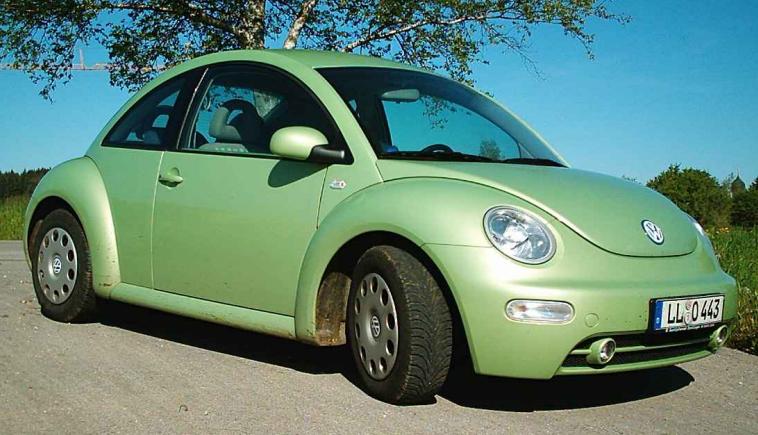
The Volkswagen New Beetle is a minor clan auto, acquainted by Volkswagen in 1998, drawing considerable enthusiasm from the outer surface configuration of the first Beetle. Unlike the first Beetle, the New Beetle has its motor in the front driving the front wheels and luggage reserves in the rear. In May 2010, Volkswagen advertised that preparation of the current group of the New Beetle will stop in 2011. 1 A redesigned model will displace it.

Volkswagen New Beetle

Volkswagen New Beetle

Volkswagen New Beetle

Volkswagen New Beetle

Volkswagen New Beetle

Volkswagen New Beetle

Volkswagen New Beetle

Volkswagen New Beetle

Volkswagen New Beetle

Volkswagen New Beetle

Volkswagen New Beetle

Volkswagen New Beetle

Volkswagen New Beetle

Volkswagen New Beetle

Volkswagen New Beetle


Thursday, September 2, 2010

2010 VolksWagen Cars Beetle Bio-Bug Powered by Sewage Waste

Mohammed Saddiq, general manager of GENeco, has another idea, which would take something that's normally thought of as waste, and turn it into a way to power a vehicle. The prototype  2010 VolksWagen Cars Beetle Bio-Bug is powered by methane gas which is produced from human waste at sewage works. Another environmentally friendly car has been shown to the world today by Wessex Water in England.
2010 VolksWagen Cars Beetle Bio-Bug Powered by Sewage Waste. The Bio-Bug is a project from Wessex Water, a sewage treatment company in England. Now there’s Bio-Bug, a VW Beetle that runs on the methane gas generated at a sewage treatment plant, reports The Telegraph. Wessex Water, near Bristol, England, says that human waste from the toilets of 70 homes can power the Bio-Bug for a year.
GENeco believes that more gas will be produced at its Avonmouth site when the company embarks on its latest green venture to recycle food waste. Mr Saddiq said: “Waste flushed down the toilets in homes in the city provides power for the Bio-Bug, but it won’t be long before further energy is produced when food waste is recycled at our sewage works.
At first glance, the Beetle appears to be a publicity stunt for GENeco, which owns a number of waste treatment sites in the U.K. But consider this: A single sewage treatment plant in Bristol, England generates 18 million cubic meters of biogas each year. The Bio-Bug squeezes out 5.3 miles per cubic meter of biogas. So just one sewage treatment plant could keep cars running for 5,400,000 miles each year, according to the British Daily Mail.
The Volkswagen Beetle dubbed the “Bio-Bug” was built for GENeco by UK’s The Greenfuel Company. The Bio-Bug’s 2.0-liter four-cylinder engine was converted to run on biogas and still hit about 114 miles per hour. However, the Bio-Bug uses regular unleaded gas to start, then switches over to methane automatically once it’s running. GENeco, a company owned by Wessex Water, supplied the equipment to treat the gas. “If you were to drive the car you wouldn’t know it was powered by biogas, as it performs just like any conventional car,” said Mohammed Saddiq, general manager of GENeco, in the release.
Mr. Saddiq explained that GENeco had been supplying treated compressed methane gas to generate electricity for the plant site and exported to the National Grid. The fuel for the Bio-Bug was surplus gas “we had available” and “we wanted to put it to good use in a sustainable and efficient way.”
The Bio-Bug was built by the Greenfuel Company, which specializes in converting gas cars to run on liquified petroleum gas.
2010 VolksWagen Cars Beetle Bio-Bug Powered by Sewage Waste
“The choice of car was inspired by students who took part in a workshop. They thought it would be appropriate that the poo-powered car should be the classic VW Beetle Bug because bugs naturally breakdown waste at sewage works to start the treatment process which goes on to produce the energy.”
Brilliant! Now, that’s a great marketing hook.

Monday, August 23, 2010

2010 Volkswagen Sports Cars - VW Solar Powered Supercar Concept


It is a luxury supercar, it will only be built in a limited number of 200 units. It was designed to be able to cruise around in the year 2020. Volkswagen supercar presented at the 2010 Swansea Metropolitan University Degree Show in automotive design by Peter Wilkins not only promises to run by solar power with greater efficiency but also offers a competitive design styling.
2010 Volkswagen Sports Cars - VW Solar Powered Supercar Concept
Peter Wilkins has designed one helluva eco-friendly car for the 2010 Swansea Metropolitan University Degree Show. His supercar would run off of an electric motor powered by photovoltaic cells, or a hydrogen fuel cell stack. Peter Wilkins’ design is one of the sexiest eco-cars I have ever seen. Making earth-friendly cars that look good is a great idea.
The unique design of Wilkins permits each of the four wheels of the vehicle to be driven by an independent electric motor powered by solar energy stored in photovoltaic (PV) cells. The upper external surface of the vehicle stores the PV cells that further supply power to the mid-mounted hydrogen fuel-cell stack, which is directly linked to the electric motors. Placement of the PV cells and hydrogen fuel-cell stack form an integral part of the elegant design of the eco car that looks like part of a supercar.
The “VW Solar Powered Supercar” by designer Peter Wilkins is a concept car that demonstrates the aesthetic aspect of eco-friendly vehicles to attract more people toward sustainable commuting.
Simply known as the “VW Solar Powered Supercar”, this vehicle shows how just clean and green travel can get, and fast too. To power up, the car turns its face away from the smelly gas pump and integrates photovoltaic cells in its body instead. It uses these to juice up with solar power.

 2010 Volkswagen Sports Cars - VW Solar Powered Supercar Concept
The energy generated is used to power up a mid-mounted hydrogen fuel cell stack, resulting in a drive without the smoke and the pitch-black carbon footprint supercars usually leave behind these days.