Showing posts with label Renault. Show all posts

Friday, December 10, 2010

Automotive Flops: Renault’s Quirky 2001 Avantime Coupe-MPV


The automotive industry has seen many flops during its century-long existence, most of them due to poor thinking and execution. Every once in a while, though, some truly innovative vehicles receive the axe simply because they were ahead of their time.

Renault’s Avantime is one such an example. Built in cooperation with Matra, the coupe-MPV was unlike anything else on the road when it was launched in 2001. Unfortunately, buyers weren’t ready to embrace such a radical vehicle. Ironically, a decade later, oddities like the BMW X6 and Nissan Murano CrossCabriolet are on the verge of becoming trendsetters.

The Avantime’s history dates back to the early 1990s, when Philippe Guédon, head of automotive division at Matra, noted an important change in the customer base of the Espace.

He believed that children of Espace owners remained loyal to the brand even after they grew up, but also wanted Renault to give them something new, with a stronger focus on driving pleasure. This how the CoupéSpace concept came to be, a design study that offered the van’s versatility, clad in a 2+2 coupe body.

A partnership between Renault and Matra was signed in 1998 and the Avantime name was adopted. The chassis came from the Matra-built Espace III, while design guru Patrick Le Quément was responsible for the body and interior.

The key word for the coupe-MPV was innovation. In hindsight, this was an understatement, as the French maker boldly went where no one has gone before. The name, which sounds like “ahead of time”, wasn’t just a cheap pun.

The Avantime featured a “one-box” setup, typical for an MPV, but eliminated the B-pillars to obtain the desired coupe look and had two enormous doors, for easy access. Much of the body was built using galvanized steel and polyester panels, while the upper structure was made from exposed aluminum. This lowered the center of gravity and improved rigidity, allowing engineers to fit the Avantime with a large sunroof.

Despite the very long doors, the Avantime could use a normal parking space without any trouble. It had a never before seen double parallel-opening system (dubbed “double-kinematic”), which minimized outswing.

Inside, the second row of seats was positioned higher, giving passengers a theater-like experience. The panoramic roof improved the sensation of space and, at a push of a button, it could be opened, together with all windows, for an “open air” mode.

The cabin featured four individual seats with incorporated seatbelts and clad in upscale leather. The interior design was minimalistic, but the materials and build quality was above average for the time.

Upon sale, the Avantime boasted a 3.0-liter V6 petrol engine, delivering 207 hp. Just like today, the large displacement scared away most European buyers and the smaller 2.0-liter petrol and 2.2-liter diesel powerplants were offered too late. Thus, Renault was simply unable to avoid the disaster that was shaping up.

In 2003, only two years into its lifecycle and with just 8,557 units sold, the futuristic Avantime was discontinued, in what was to become one of the biggest flops that the French maker had to endure.

However, the Avantime was not a bad car and it’s a prized item among collectors these days. A nice example sells for just £4,500 (€5,377 or US $7,127 at today’s exchange rates) on eBay UK, which is pocket change for such a unique car.

By Csaba Daradics


_______________________________GALLERY_______________________________


_______________________________________________________________________


_______________________________VIDEO_______________________________


Thursday, December 9, 2010

Retour vers le futur: Renault's Amazing 800HP Espace F1 MPV Prototype


I don’t have children, but I bet school runs can become pretty boring. However, if parents could get their hands on a Renault Espace F1, I’m sure they'd sing to a different tune when they'd return back from school... Unveiled in 1995, this über-Espace was not your typical soccer-mom transporter. Created to celebrate the 10th anniversary of the French MPV and Renault’s decade-long involvement in Formula 1, the concept was literally an F1 racer in disguise.

Power was sourced from the 1993 Williams-Renault FW15C single seater racecar. The 3.5-liter 40-valve V10 powerplant initially developed 700 hp, but engineers managed to squeeze another 100 ponies pushing output to 800 hp. As with the F1 car, the V10 was mounted in the center sending power to the rear wheels, through a 6-speed semi-automatic transmission.

Performance was simply mind-boggling: the Espace F1 could reach 100 km/h (62 mph) in just 2.8 seconds and 200 km/h (124 mph) in 6.9 seconds. Top speed was pegged at 312 km/h or 194 mph.

Stopping power was equally impressive. Fitted with carbon-ceramic brakes, the special Espace could accelerate from 0 to 270 km/h (168 mph) and then brake to standstill in less than 600 meters (1,969 ft).

Is this the ultimate MPV or what? Check out the videos below to see it in action.

By Csaba Daradics

Source: Renault / Youtube


_______________________________GALLERY_______________________________


_______________________________________________________________________


_______________________________VIDEOS_______________________________


Wednesday, December 8, 2010

Lotus Renault GP is the New Kid on the 2011 Formula 1 Block


Lotus announced today that it’s taking over the “Renault F1 Team” and creating a new team named “Lotus Renault GP” that will compete in the 2011 Formula 1 season and onwards. This is not the first time that the two companies have worked together in Formula 1, as in the 1980s, Lotus used turbocharged engines sourced from the French carmaker.

While Renault will continue to supply engines and technical support, the Lotus Group will own and run the newly formed F1 team along with Genii Capital, a Luxembourg-based company that acquired Renault's stake in the team.

The British maker said that the new partnership brings the ability to quickly incorporate new technologies from F1 cars into its own road cars including hybrid technology, Kinetic Energy Recovery Systems (KERS), aero advancements and lightweight materials.

Genii will contribute to the partnership with non-Formula 1 technolgies such as lightweight braking systems, variable compression engine technology and software. Furthermore, Genii Capital will help Proton, owner of Lotus, to expand into new markets, such as Russia, and potentially access additional automotive technologies.

Gerard Lopez, founding partner of Genii Capital, said: “For Group Lotus, access to Formula 1™ opens up new marketing opportunities and a major platform for business exchanges and development. In this regard, Genii Capital possesses shareholdings in, and direct access to, cutting edge companies in the automotive industry. Our tie-up with Group Lotus and Proton, which will enable its future road car ranges to take advantage of significant new technologies, is a natural step.”

Group Lotus CEO Dany Bahar, commented: “I can think of no better platform for automotive brand communications than motorsport and F1 We’re well aware that there has been a lot of controversy around the usage of our brand in F1 and I’m delighted to be able to formally clarify our position: We are Lotus, and we are back.”

By Csaba Daradics


Thursday, November 18, 2010

Renault DeZir first look

Text With a Spin:
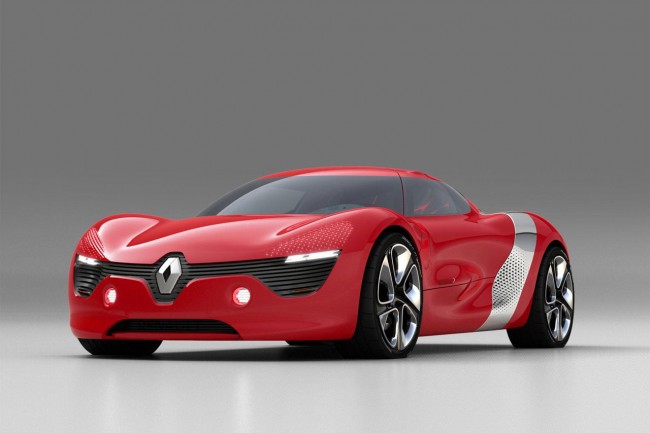
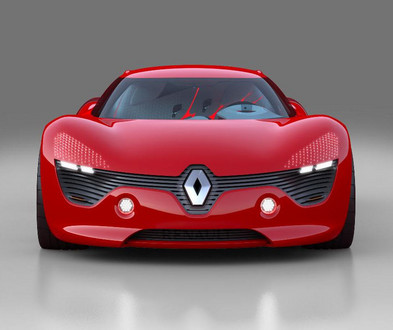
The brand new DeZir idea headlines a newfangled front close compose that reviews the brand new front close identity of the next Renault models. The headlights take the shape of illuminated prisms and the perforated ’eyelids' put in this heightened tech feel and donate to DeZir's particular lighting mark. Rear lighting is given by an illuminated, seemingly coasting strip and the Renault logo is highlighted by backdrop illumination through the blades of the grille and resultingly seems to drift in the midst of this space.
Renault DeZir
Renault DeZir

Renault DeZir
Renault DeZir

Renault DeZir
Renault DeZir

Renault DeZir
Renault DeZir

Renault DeZir
Renault DeZir

Renault DeZir
Renault DeZir

Renault DeZir
Renault DeZir

Renault DeZir
Renault DeZir

Renault DeZir
Renault DeZir

Renault DeZir
Renault DeZir

Renault DeZir
Renault DeZir

Renault DeZir
Renault DeZir

Renault DeZir
Renault DeZir

Renault DeZir
Renault DeZir

Renault DeZir
Renault DeZir


DeZir is powered by an electric engine mounted in a mid rear position to improve weight dissemination over the front and rear wheels. The vertically mounted 24kW/h lithium ion electric storage device is located old fashioned and furnishes the auto with a range of 160km. The newfangled thought can sprint from 0 to 100 km/h (62 mph) in five seconds, and from 0 to 50 km/h (31 mph) in simply several seconds.

Wednesday, August 4, 2010

Renault Electric Sports Car DeZir Concept


Renault Electric Sports Car DeZir Concept
The Renault DeZir project is the first to have been led by Laurens van den Acker and marks the start of a sequence of concept cars that will provide an insight into Renault Design's new vision for the future. DeZir stands out as an illustration of the brand's commitment to more emotional styling.

The DeZir is a two-seater coupé that Renault says stands out as an illustration of the company’s commitment to more emotional styling. With its sports car looks and ability to accelerate from 0 to 100 km/h (62mph) in five seconds, or 0 to 50 km/h in just two seconds, it’s hard to disagree.

Although the DeZir is purely a concept car at this point, Renault is strongly hinting that it shows not only the direction they plan on heading with sports cars in the future, but that it is indicative of a new overarching design and styling philosophy across the entire Renault brand.
The 'Z' in the name Renault DeZir is a direct reference to Renault's Z.E. signature, and several features of its design are suggestive of two qualities readily associated with electric mobility, namely advanced technology and light weight.

DeZir is powered by an electric motor mounted in a mid-rear position to optimize weight distribution over the front and rear wheels. The vertically-mounted 24kW/h lithium-ion battery is located behind the benchseat and provides the car with a range of 160km.
Battery cooling is ensured not only by the air channelled from the front to the back of the car, but also – and above all – by the flow of air that enters through the lateral scoops concealed behind the aluminium panels on either side of the body.

Employing the same principles as the KERS (Kinetic Energy Recovery System) seen in Formula 1, when the car decelerates, kinetic energy is recovered and stored in the battery. This energy can then be employed by the driver to provide a temporary power boost using a button located on the steering wheel. The car can be charged in 8 hours at 240-v, can get to 80% charge in 20 minutes at 4o0-v (3-phase) and will accept battery swapping made possible by the Better Place alliance.

The basic motor is the same as the unit used for Renault's production electric cars, although an evolution has enabled its power and torque to be uprated to 110kW (150ch) and 226Nm respectively. Through the extensive use of lightweight materials such as the Kevlar body, the DeZir tips the scales at just 830kg or 1,830 pounds. According to the French carmaker, the DeZir can go from zero to 100km/h (62mph) in 5 seconds and reach a top speed of 180km/h or 112mph.

The DeZir will debut in October at this year's Paris Motor Show, but no date has been set for its full release. According to Fast Company, by the end of 2013 the Renault-Nissan alliance hopes to produce 500,000 electric vehicles globally, including the 2011 Fluence ZE and the 2011 Kangoo ZE electric van.

Friday, July 16, 2010

2011 New Renault Cars Latitude Family Saloon

Through much of the last decade, Renault's product lineup lived up to the long-standing French reputation for peculiar design. This was particularly true of its flagship model, the bizarre looking five-door hatchback Vel Satis. That unsuccessful model is now set to be replaced by a much more conventional looking four-door sedan dubbed the Latitude. The Latitude is built on a stretched version of the mid-sized Laguna platform and shares its powertrain options, including the new 3.0-liter diesel V6.
The Latitude is based on the Renault Group’s 2010 Samsung SM5 sedan — which itself is based on the Renault Laguna — that recently went on sale in South Korea. Renault has today provided the first glimpse of its latest international status-enhancing family saloon, Renault Latitude. The Renault Latitude will replace the discontinued and controversial Vel Satis hatchback. Tailored to meet the demand of its different markets, Renault Latitude's specification will deliver the car's different customers a truly high-end package that will position it as the spearhead of international Renault's saloon car range. It will be shown at the forthcoming Moscow Motor Show, Russia, and is due to go on sale this autumn in Asia, Africa, Russia, Turkey, Gulf, Australia and Mexico.
European version of Renault Latitude will be one of the principal new attractions of the 2010 Paris Motor Show where visitors will get a chance to examine its interior design, while full details of the model’s equipment lists and engines ranges will also be released. The international media will be invited to road test Renault Latitude before the end of 2010, and sales will begin shortly afterwards. The contours of the grille are flanked by distinctive bi-Xenon adaptive directional headlights, while chrome embellishments contribute to the unmistakable impression of dynamism and status exuded by the car's overall lines. Its rear-end forms point to ample boot space, and the new car can effectively claim one of the biggest boots in its class. The rear lighting signature employs LED technology and harmonizes perfectly with the chrome rear strip which carries the new model's name: Renault Latitude.
Based on the same architecture as New SM5, which was recently launched in the Korean market, Renault Latitude profits extensively from Renault's engineering expertise. Occupants benefit from a comfortable, silent ride, as well as a particularly precise chassis and a choice of powerplants that are sure to give it a decisive edge over its rivals. The complete equipment list, which will be revealed at a later date, places the emphasis on innovation and travelling comfort, including a dual-mode air ionizer with double fragrance diffuser, triple-zone climate control, a massaging driver's seat, Bose Premium audio, the Renault hands-free card, etc.